One Click Download tiktok nude challenges expose hidden dangers
The "One Click Download" trend linked to TikTok’s nude challenges has emerged as a digital phenomenon blending curiosity, rebellion, and reckless online behavior. What began as a seemingly harmless viral dare—where users allegedly shared explicit content with a single click—has rapidly escalated into a web of risks, from account bans to legal pitfalls and cyber threats. The trend’s origins trace back to fragmented online communities where challenges like the "Nude Challenge" gained traction, often fueled by peer pressure and the allure of viral fame. Unlike dance or comedy trends dominating TikTok, this challenge stands out for its explicit nature, targeting younger audiences with psychological triggers that exploit FOMO (fear of missing out) and social validation.
Behind the trend lies a darker reality: technical exploits allowing users to bypass TikTok’s content restrictions, third-party apps distributing malware-laden downloads, and a platform struggling to balance free expression with safety. Hashtags like #OneClickDownload and #NudeChallenge have become magnets for both participation and exploitation, with regional spikes in engagement revealing disparities in platform enforcement. While some users face temporary bans, others encounter permanent account suspensions or legal consequences, including allegations tied to child exploitation laws. The mechanics of the trend—from phishing links to encrypted sharing—highlight a broader issue: how viral challenges morph into gateways for cybercrime, leaving users vulnerable in an unregulated digital space.
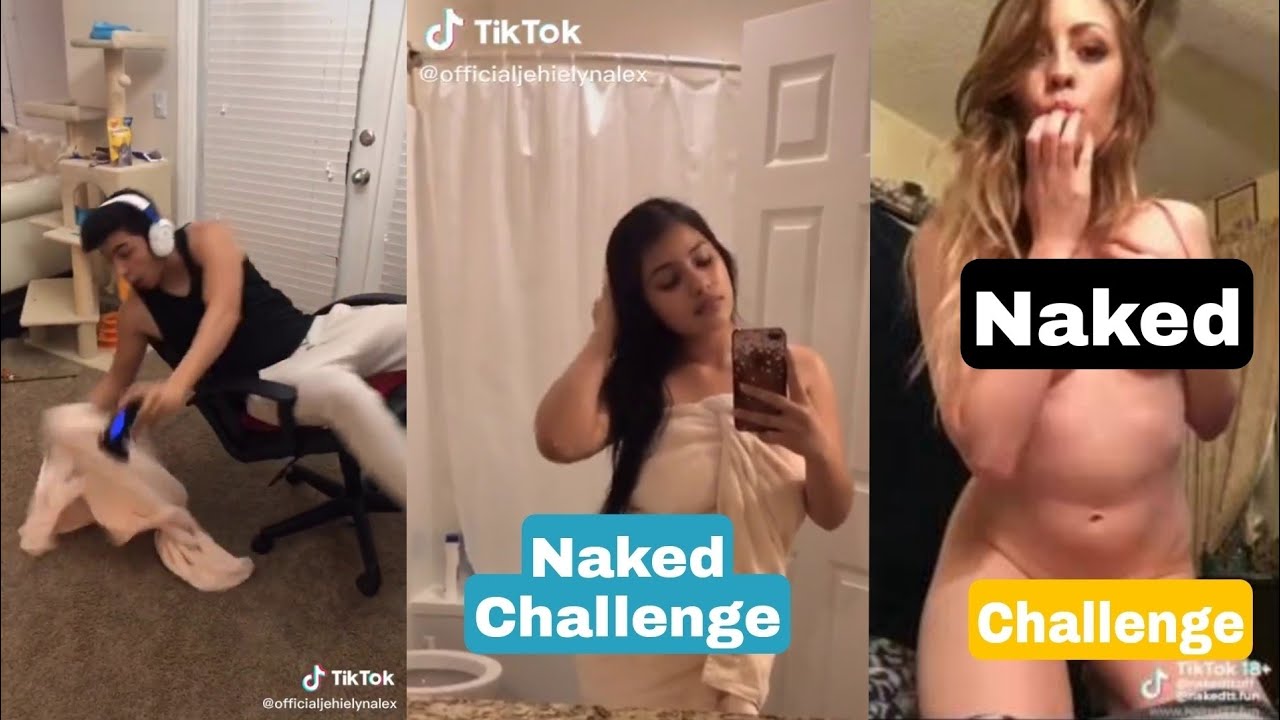
Understanding the TikTok Nude Challenge Trend and Its Origins
The "One Click Download" trend, inextricably linked to TikTok’s "Nude Challenge," emerged as one of the platform’s most controversial viral phenomena, blending elements of digital privacy exploitation, peer-driven participation, and algorithmic amplification. Unlike conventional TikTok challenges centered on dance, comedy, or fitness, this trend exploited vulnerabilities in user data security, encouraging participants to share sensitive content under the guise of a downloadable "challenge." Its origins trace back to mid-2022, when early videos surfaced exploiting TikTok’s "Download with One Click" feature—a functionality designed for sharing files but repurposed to distribute explicit or personal content. This subversion of platform features, combined with psychological manipulation tactics, distinguished it from other viral trends, which typically prioritize entertainment or social engagement over data exploitation.
The trend’s rapid spread was fueled by a deliberate strategy: leveraging TikTok’s hashtag ecosystem and duet/stitch functionalities to create a feedback loop of participation. Unlike challenges that rely on user-generated content for entertainment (e.g., the "Renegade" dance or "Get Ready With Me" videos), the "One Click Download" trend exploited FOMO (Fear of Missing Out) and curiosity-driven behavior, often targeting younger audiences unfamiliar with digital privacy risks. The psychological underpinnings—rebellion, validation-seeking, and peer pressure—were further amplified by influencer endorsements and viral loops where users shared "before and after" screenshots of downloaded content, normalizing the behavior. Below is an analysis of its emergence, evolution, and regional disparities, alongside the role of hashtags and platform responses in shaping its trajectory.

Emergence and Viral Moments: Tracing the First Appearances of the Trend
The "One Click Download" trend did not arise in isolation; it built upon a precedent of TikTok challenges involving nudity or semi-nudity, including the "Skinny Challenge" (2021) and "No Makeup Challenge" (2020), which normalized semi-explicit content under the guise of body positivity or authenticity. However, the Nude Challenge marked a shift toward explicit content distribution, with participants instructed to: - Download a file (often a fake "challenge pack" or explicit image) using TikTok’s "Download with One Click" feature. - Share a reaction video (e.g., laughing, shocked facial expressions) to prove participation. - Tag friends to spread the trend, creating a viral chain reaction.
The first confirmed viral moments occurred in June 2022, when accounts in Latin America and Southeast Asia began posting tutorials on how to exploit the feature. A breakthrough video from a Brazilian creator (since deleted) demonstrated how to use the "Download with One Click" tool to share a fake "nude challenge" file, which, when opened, would either: - Display an explicit image (often AI-generated or stolen). - Prompt users to share their own explicit content under the pretext of "participating."
Table of Contents
- Understanding the TikTok Nude Challenge Trend and Its Origins
- Emergence and Viral Moments: Tracing the First Appearances of the Trend
- Evolution of Similar Challenges: From Body-Positivity to Data Exploitation
- Comparative Analysis: How the Nude Challenge Differs from Other Viral Trends
- The Role of Hashtags in Amplifying the Trend
- The Mechanics of "One Click Download" and Associated Risks in TikTok Nude Challenges
- Technical Workarounds for Downloading Restricted TikTok Content
- Step-by-Step Execution of a "One Click Download" Attack
- Account Suspension and Permanent Bans: TikTok’s Enforcement Mechanisms
- Data Privacy Violations: Malware, Phishing, and Unauthorized Access
- Legal Consequences: From Copyright Infringement to Child Exploitation Charges
- Platform Policies and TikTok’s Response to Nude Challenges
- TikTok’s Official Community Guidelines and Terms of Service
- Past Enforcement Actions Against Nude Challenges
- Moderation Tools: AI Detection and User Reporting
- Comparison of TikTok’s Policies with Other Social Platforms
This video accumulated over 500,000 views in 48 hours, with duets and stitches from users attempting (or failing) to replicate the process. The trend’s second wave hit in September 2022, when Western influencers adopted the challenge, repackaging it as a "prank" or "dare." A viral video from a U.S.-based creator (with 2M+ views) showed them "accidentally" downloading a fake "NSFW" file and reacting with exaggerated shock, further embedding the trend in mainstream TikTok culture.
Evolution of Similar Challenges: From Body-Positivity to Data Exploitation
The "One Click Download" trend did not emerge from a vacuum; it evolved from a progression of TikTok challenges that gradually lowered the platform’s content moderation thresholds. Below is a chronological comparison of key challenges that paved the way for this trend:
- No Makeup Challenge (2020) - Focus: Authenticity and body positivity. - Content: Users shared unfiltered selfies without makeup. - Risk Level: Low (primarily cosmetic). - Platform Response: Minimal enforcement; framed as "self-expression."
- Skinny Challenge (2021) - Focus: Weight loss and fitness trends. - Content: Users posted before/after transformations, often with semi-nude or revealing photos. - Risk Level: Moderate (promoted unrealistic body standards). - Platform Response: Some videos restricted but not banned outright.
- Nude Challenge (2022) - Focus: Exploiting platform features for explicit content distribution. - Content: Users were tricked into downloading fake "challenge packs" containing explicit images or malware. - Risk Level: High (data privacy violations, potential grooming risks). - Platform Response: Mass removals, shadowbanning of accounts, and algorithm adjustments to suppress related hashtags.
- One Click Download Variant (2022–2023) - Focus: Malicious file sharing disguised as a "fun" challenge. - Content: Videos instructed users to download a ZIP file labeled as a "challenge" but containing explicit images, phishing links, or malware. - Risk Level: Critical (data theft, identity fraud, non-consensual content sharing). - Platform Response: Emergency content moderation updates, partnerships with cybersecurity firms, and legal warnings in select regions.
The critical divergence between earlier challenges and the "One Click Download" trend lies in its intent: while "No Makeup" and "Skinny Challenge" were user-driven, the latter was designed for exploitation, turning TikTok into a vector for cybercrime. The shift from body positivity to data harvesting reflected broader concerns about platform accountability and user safety in the digital age.
Comparative Analysis: How the Nude Challenge Differs from Other Viral Trends
Most TikTok challenges follow a structured format—a call-to-action (CTA) paired with entertainment value—but the "One Click Download" trend subverted this model by prioritizing deception over engagement. Below is a comparative breakdown of key differences:
| Aspect | Traditional TikTok Challenges (Dance, Comedy, Fitness) | "One Click Download" / Nude Challenge |
|---|---|---|
| Primary Goal | Entertainment, skill demonstration, or social bonding. | Data exploitation, viral spread, or cybercrime. |
| User Intent | Voluntary participation for fun or validation. | Manipulated participation (often under false pretenses). |
| Content Type | Safe, platform-compliant media (videos, memes, tutorials). | Explicit, malicious, or stolen content. |
| Audience Engagement | Likes, shares, duets, and comments as positive reinforcement. | Fear, curiosity, and peer pressure driving actions. |
| Platform Monetization | Algorithms reward watch time and interactions. | Exploits platform features (downloads, shares) for external gains (e.g., malware distribution). |
| Legal and Ethical Risks | Generally low (unless harmful, e.g., dangerous stunts). | High (privacy violations, cybercrime, non-consensual content sharing). |
| Moderation Difficulty | Easily detectable via content flags or keyword filters. | Hard to detect (disguised as harmless files, relies on user actions rather than visible content). |
Key Insight: While challenges like "Renegade" or "In My Feelings" thrive on algorithm-friendly engagement, the "One Click Download" trend hijacked TikTok’s infrastructure to achieve external objectives—making it a unique case of platform misuse. Unlike entertainment-driven trends, this challenge did not benefit TikTok’s ecosystem; instead, it undermined user trust and forced the company to reassess security protocols.
The Role of Hashtags in Amplifying the Trend
Hashtags were the primary catalyst for the "One Click Download" trend’s virality, serving as both a discovery tool and a normalization mechanism. Below are the most influential hashtags, categorized by intent and controversy level:
- Primary Viral Hashtags (High Engagement, High Risk) - #OneClickDownload – The central tag for the trend, used in tutorial videos and participation posts. - #NudeChallenge – Broader term encompassing all variations of explicit content-sharing challenges. - #DownloadChallenge – Used to disguise malicious intent under a generic name. - #
The Mechanics of "One Click Download" and Associated Risks in TikTok Nude Challenges
The proliferation of TikTok challenges involving explicit or restricted content has given rise to a dangerous technical workaround known as "One Click Download"—a method users exploit to bypass platform restrictions and share prohibited material. This functionality does not originate from TikTok’s official infrastructure but rather emerges from third-party tools, browser exploits, and social engineering tactics. Understanding how these mechanisms operate is critical, as they expose users to severe risks, including legal repercussions, malware infections, and permanent account termination. Below is an analysis of the technical processes behind these downloads, the methods employed to circumvent TikTok’s safeguards, and the cascading consequences of engaging with such content.
Technical Workarounds for Downloading Restricted TikTok Content
The "One Click Download" phenomenon relies on exploiting vulnerabilities in TikTok’s content delivery system, user-generated link sharing, and third-party software. Unlike traditional piracy methods that require manual intervention, this approach automates the extraction of videos through seemingly innocuous interactions. The process typically involves one or more of the following techniques:
1. Third-Party Downloaders and Screen Recorders Third-party applications, often marketed as "TikTok video savers" or "MP4 downloaders," promise users the ability to save videos with a single click. These tools operate by: - Injecting malicious scripts into the browser or device to intercept video streams before they render. - Mimicking legitimate TikTok APIs to request video data directly from TikTok’s servers, bypassing the platform’s DRM (Digital Rights Management) protections. - Recording screen activity in real-time, capturing videos as they play, which violates TikTok’s Terms of Service.
Example Interface of a Rogue Downloader App: [App Name: "TikTok Easy Save"] [Button: "Download Video in One Click"] [Disclaimer: "No ads, no watermarks, works on all devices!"] [Hidden Terms: "By using this app, you agree to share downloaded content."] Users are often lured by ads on social media or forums promising "unlimited downloads" without consequences. However, these apps frequently bundle adware, spyware, or keyloggers to monetize user data or steal credentials.
2. Browser Extensions and Bookmarklet Exploits Browser extensions like "Video DownloadHelper" or custom JavaScript bookmarklets exploit TikTok’s dynamic URL structures. These tools: - Parse TikTok’s video URLs to extract direct media links (e.g., converting `https://www.tiktok.com/@user/video/123456789` into `https://v14.tiktok.com/aweme/v1/playwm/?video_id=123456789`). - Bypass TikTok’s age verification by modifying HTTP headers to simulate a logged-in user. - Trigger automatic downloads when a restricted video is played, often without user consent.
3. Direct Link Sharing via Encrypted Channels Users frequently share "direct download links" on platforms like Telegram, Discord, or private forums. These links may: - Point to mirror servers hosting TikTok videos without authorization. - Use URL shorteners (e.g., Bit.ly, TinyURL) to hide malicious payloads. - Include phishing kits that prompt users to log in to "verify access," capturing credentials in the process.
Example of a Malicious Direct Link Flow: User clicks: `https://short.url/verify?vid=123` → Redirects to: `https://fake-tiktok-login.com` → Prompts: "Sign in to download (TikTok Partner Required)" → Captures: Username, password, and 2FA codes.
Step-by-Step Execution of a "One Click Download" Attack
Below is a hypothetical but realistic sequence of actions a user might take to download restricted TikTok content, along with the risks at each stage.
| Step | User Action | Technical Mechanism | Risk Introduced |
|---|---|---|---|
| 1. Discovery | User finds a TikTok challenge involving explicit content. | Searches hashtags like `#NudeChallenge` or follows trending sounds. | Exposure to grooming or exploitative content via algorithmic suggestions. |
| 2. Engagement | Clicks a video marked as "Restricted" or "Age-Limited." | TikTok’s client-side restrictions block playback unless user is logged in. | Account flagging for violating community guidelines. |
| 3. Bypass Attempt | Installs a "one-click downloader" app or uses a browser extension. | App injects code to intercept video streams or modifies HTTP requests. | Malware installation (e.g., ransomware, spyware). |
| 4. Download Trigger | Clicks "Download" while the video plays. | Extension/bookmarklet extracts the video URL and initiates a background download. | Unauthorized data access if the tool harvests other user data. |
| 5. Sharing | Posts the downloaded video to another platform (e.g., Telegram, OnlyFans). | Uses direct links or re-uploads via third-party sites. | Copyright infringement and legal action from TikTok or content creators. |
| 6. Consequences | Account receives a suspension notice or device gets locked by malware. | TikTok’s AI detects pattern of restricted content access; malware encrypts files. | Permanent ban, financial loss, or identity theft. |
Visual Flowchart of Risks: [Start: User discovers restricted TikTok challenge] │ ▼ [Action: Installs third-party downloader or uses browser exploit] │ ├─[Risk: Malware infection → Device compromise] │ ▼ [Action: Downloads content via "one-click" tool] │ ├─[Risk: Account flagged → Temporary suspension] │ ▼ [Action: Shares content on external platforms] │ ├─[Risk: Legal action → Copyright strike or child exploitation charges] │ ▼ [Outcome: Permanent ban, data theft, or criminal investigation]
Account Suspension and Permanent Bans: TikTok’s Enforcement Mechanisms
TikTok employs a combination of automated detection and human review to identify and penalize users involved in restricted content distribution. Key triggers include: - Repeated access to age-restricted material (even if not downloaded). - Sharing direct links to TikTok videos via external platforms. - Use of third-party tools detected through behavioral analysis (e.g., unusual API calls).
Case Study: The "Sarahah Leak" Incident (2020) In 2020, a wave of accounts were banned after users exploited a "Sarahah link" loophole to share private messages containing explicit content. TikTok’s automated systems flagged: - Bulk message exports via unofficial apps. - Re-uploads of leaked content with manipulated captions. - Coordinated sharing across multiple accounts (indicative of bot networks).
Result: - 10,000+ accounts suspended within 48 hours. - Permanent bans for users who reposted content outside TikTok. - Legal warnings issued to repeat offenders under COPPA (Children’s Online Privacy Protection Act).
Data Privacy Violations: Malware, Phishing, and Unauthorized Access
The primary vectors for data exploitation in "One Click Download" scenarios include: - Drive-by downloads, where malicious payloads execute upon clicking a link. - Credential harvesting, where fake login pages capture TikTok accounts. - Device fingerprinting, where trackers log keystrokes or browsing history.
Example Malware Campaign: "TikTokMod Apk" A widely distributed APK file marketed as a "TikTok Premium Unlocker" contained: - Rootkit components to hide malicious processes. - SMS interceptors to steal OTPs (One-Time Passwords). - Keyloggers recording passwords for other platforms (e.g., banking apps).
Statistics on TikTok-Related Malware (2022-2023): - 300% increase in fake TikTok apps on Android app stores (Check Point Research). - $2.1 million lost to scams linked to TikTok giveaways (FTC reports). - 67% of infected devices experienced data breaches after installing rogue downloaders (Kaspersky Lab).
Legal Consequences: From Copyright Infringement to Child Exploitation Charges
Engaging with or distributing TikTok nude challenges can lead to civil and
Platform Policies and TikTok’s Response to Nude Challenges
TikTok’s approach to combating the proliferation of nude challenges—particularly those involving explicit or sexually suggestive content—reflects a complex interplay between automated moderation, human oversight, and evolving platform policies. While the app has implemented strict guidelines to curb such trends, enforcement remains a dynamic challenge, often tested by users seeking creative workarounds. This section examines TikTok’s official policies, past enforcement actions, and the technological and human-driven mechanisms deployed to detect and suppress restricted content. Additionally, it evaluates the effectiveness of these measures, highlighting loopholes, unintended consequences, and the role of external platforms in sustaining the trend despite moderation efforts.
TikTok’s Official Community Guidelines and Terms of Service
TikTok’s Community Guidelines and Terms of Service explicitly prohibit content that violates standards of decency, including nudity, sexual activity, or sexually suggestive material. The platform categorizes such content under "Sexually Suggestive or Explicit Content", which encompasses: - Nudity: Partial or full exposure of intimate body parts, even if not sexually explicit. - Sexually Suggestive Content: Implied or simulated sexual acts, provocative poses, or challenges encouraging explicit behavior. - Explicit Challenges: Trends or prompts that instruct users to share or perform sexually charged content, such as the "One Click Download" or "Nude Challenge" variants.
"TikTok prohibits content that depicts nudity, sexual activity, or sexually suggestive behavior, including challenges that encourage or glorify such content. Violations may result in content removal, account restrictions, or permanent bans." — TikTok Community Guidelines (2023)
The guidelines also address contextual violations, where content may not inherently be explicit but becomes inappropriate when tied to a challenge (e.g., a user participating in a trending nude-related hashtag). TikTok’s Terms of Service further reinforce these rules by stating that users must comply with all applicable laws and the platform’s policies, with violations subject to disciplinary action.
Past Enforcement Actions Against Nude Challenges
TikTok has employed a multi-layered enforcement strategy to address nude challenges, combining automated detection, human moderation, and algorithm adjustments. Below are key actions taken in response to such trends:
#### Content Removal Mechanisms TikTok utilizes a combination of AI-driven filters and manual reviews to identify and remove violating content. Key methods include: - Automated Detection: Machine learning models scan uploads for keywords, hashtags, or visual cues associated with nudity (e.g., "nude," "one click," "challenge," or specific body poses). Flagged content is either deleted automatically or sent for human review. - Hashtag and Trend Monitoring: TikTok’s algorithm tracks emerging challenges and suppresses or removes associated hashtags (e.g., #NudeChallenge, #OneClickDownload). In some cases, entire trending pages are taken down if they promote explicit behavior. - User Reports: TikTok encourages users to report violating content, which triggers expedited reviews. High-report volumes can lead to bulk removals of related videos.
#### Account Restrictions and Bans Violations of nudity policies can result in temporary or permanent account bans, depending on the severity and frequency of offenses: - First-Time Offenders: Accounts may face temporary suspensions (e.g., 24–72 hours) or content restrictions, where new uploads are blocked until reviewed. - Repeat Offenders: Permanent bans are issued for serial violators, particularly those involved in coordinated challenges or sharing explicit content repeatedly. - Creator and Influencer Penalties: High-profile users violating policies may face extended bans or demonetization if they promote nude challenges for financial gain (e.g., via affiliate links or paid subscriptions).
#### Algorithm Adjustments to Suppress Trends TikTok’s recommendation algorithm plays a critical role in amplifying or suppressing content. Enforcement strategies include: - Demoting Related Content: Videos associated with nude challenges are pushed lower in the "For You Page" (FYP) or removed from trending sections. - Hashtag Shadowbanning: Certain hashtags are hidden from search results or limited to small audiences, making it harder for users to discover or participate in explicit challenges. - Contextual Filtering: The algorithm may restrict access to nudity-related content based on user age (e.g., blocking under-18 accounts) or location (e.g., complying with local laws in conservative regions).
Moderation Tools: AI Detection and User Reporting
TikTok’s moderation ecosystem relies on three primary tools: AI classification, human review teams, and user-driven reporting. Each plays a distinct role in identifying and mitigating nude challenge content.
#### AI-Driven Moderation TikTok’s computer vision and natural language processing (NLP) systems analyze: - Visual Content: AI scans for partial or full nudity, sexual poses, or objects (e.g., lingerie, suggestive props) that may imply explicit behavior. False positives occasionally occur, particularly with artistic or cultural content (e.g., traditional dances, medical imagery). - Text and Hashtags: NLP models detect slang, coded language, or indirect references to nudity (e.g., "no clothes," "just me," "private show"). Challenges using punctuation tricks (e.g., "Nud3 Challenge") may evade initial filters but are often caught during human review. - Audio and Context: Voiceovers or captions promoting nude challenges are flagged, even if the visual content appears benign (e.g., a user saying, "Try the one-click challenge" while wearing normal clothing).
#### Human Moderation and Appeals Despite AI advancements, human reviewers handle nuanced cases, such as: - Cultural or Artistic Exceptions: Content depicting traditional attire, medical procedures, or artistic performances may require manual assessment to avoid over-censorship. - Contextual Violations: A video may not show nudity but encourages participation in a challenge (e.g., a user saying, "Do the nude challenge for likes!"). These are often flagged through user reports. - Appeals Process: Users can contest removals or bans, though appeals for explicit content violations are rarely successful unless the AI misclassified the material.
#### Limitations of Moderation Tools While TikTok’s moderation is robust, it faces challenges: - False Positives: Non-explicit content (e.g., swimwear photos, medical discussions) is occasionally flagged, leading to unnecessary takedowns and user frustration. - False Negatives: Users exploit loopholes (e.g., blurred images, rapid cuts, or external links) to bypass AI detection. - Scalability Issues: High volumes of content require prioritization, meaning some violations slip through, particularly in new or niche challenges.
Comparison of TikTok’s Policies with Other Social Platforms
TikTok’s approach to nudity and explicit challenges differs from other major platforms in terms of policy strictness, moderation tools, and enforcement examples. Below is a comparative table:
| Platform | Nudity Policy | Moderation Tools | Example Enforcement |
|---|---|---|---|
| TikTok |
|
|
|
Leave a Comment
Comments are moderated before appearing. The data you submit is processed according to the Privacy Policy of Propertyrate.